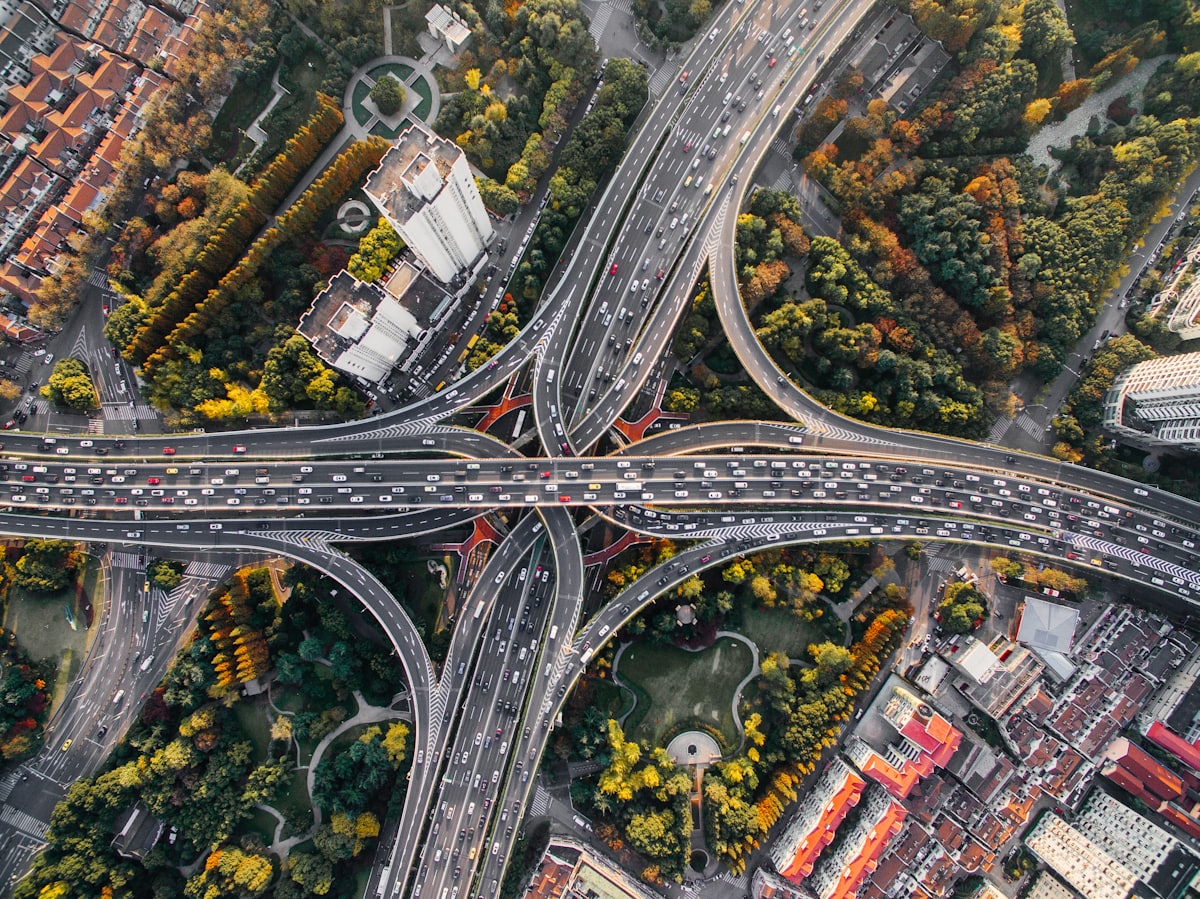
China’s transport network is fast, extensive and easier to use than it first appears. High-speed rail connects major cities, while metros, ride-hailing and shared bikes handle most everyday journeys once you arrive.
Choose transport by journey
Fly
Best when crossing very large distances or when time matters more than the airport transfer.
High-speed rail
Usually the most comfortable and convenient choice between well-connected cities.
Private driver
Useful for rural routes, scenic areas and groups travelling beyond rail and bus networks.
Travelling between cities
How to choose and use high-speed trains, domestic flights, long-distance buses and private drivers.
High-speed and sleeper trains
High-speed rail is usually the best option between major cities. Trains can reach 350 km/h, stations are generally closer to city centres than airports, and even second-class carriages are modern and comfortable. Expect assigned seating, luggage racks, power outlets, tray tables, toilets and hot-water dispensers.
Conventional and sleeper trains are slower and less polished, but can make sense for overnight journeys or routes with limited high-speed service. They also save the cost of a hotel night and offer a more traditional rail experience.
Booking train tickets
- China Railway currently uses a 15-day advance-sale window including the travel date
- Book early for weekends, popular routes and public holidays
- Use official 12306 for direct booking or an English-language platform for an easier interface
- Check the exact station because many cities have several
What to keep ready
- The original passport used for booking
- Train number, departure time, station and gate
- Offline booking details and hotel address
- Snacks and a clearly marked power bank within railway limits
Need help booking China train tickets?
Send us your route and travel dates. Our team will review your request and reply with available options and pricing within 24 hours.
From station entrance to your seat
- Arrive 30–60 minutes earlyLarge stations operate like airports, with identity checks, baggage screening and central waiting halls.
- Find the correct gateUse the train number and departure time, not only the destination. One gate may serve several trains.
- Use the passport laneForeign passports may not work at every automatic gate, so follow signs or staff directions to a manual channel.
- Match your carriage positionPlatform screens and floor markings show where each carriage should stop. Trains may board and depart quickly.
- Prepare before your stopYour destination may not be the final station. Set an alarm, gather luggage early and be ready to leave promptly.
Flying within China
Flying becomes more attractive on very long routes, when trains are sold out or when a direct flight saves substantial time. Compare the complete journey rather than flight time alone: include travel to the airport, check-in, security and the transfer at your destination.
- Confirm the airport and terminal — large cities may have more than one airport
- Check baggage allowance before booking, especially on low-cost fares
- Keep spare batteries and power banks in hand luggage, not checked baggage
- Allow extra time for domestic security checks
Buses and private drivers
Long-distance buses are most useful where rail and air links are limited. They are harder to book in English and generally less comfortable, so ask your hotel for help when a bus is the only practical option.
For rural areas, scenic routes and unusual itineraries, a private driver offers flexibility and door-to-door convenience. It can be good value for a group sharing the cost. Book through a reputable hotel, travel platform or established local operator, and confirm the route, waiting time and total price in writing.
Prefer to drive yourself?
An International Driving Permit alone is not accepted in mainland China. Eligible visitors must obtain a Chinese temporary driving permit before driving a rental car, so confirm eligibility before submitting a rental request.
Getting around Chinese cities
How to combine walking, maps, metros, taxis, Didi, buses and shared bikes for everyday travel.
Start with the right map
Amap, also called Gaode Maps, is one of the map apps most widely used by locals and the most useful all-round navigation option for visitors to mainland China. It provides walking, driving and public-transport routes, real-time traffic, nearby places and saved locations. Google Maps cannot plan high-speed rail or metro journeys, and its driving routes may not be up to date. Apple Maps is a practical English-language alternative on iPhone.
Metro
Usually the fastest and easiest way around large cities. Lines are numbered and colour-coded, with English signs and announcements on major systems.
- Use an Alipay transport QR code or an English-language ticket machine
- Scan or present bags at the entrance security check
- Follow interchange and exit signs carefully
- Check local operating times and avoid rush hour where possible
Taxi and Didi
Official taxis are widely available, but drivers may not speak English. Didi provides an English interface, an upfront fare and in-app destination details.
- Show traditional taxi drivers the destination in Chinese
- Ask the taxi driver to use the meter
- Use Didi in its app or through the Alipay mini-program
- Check the licence plate before entering the car
Walking and buses
Walking is the best way to understand a neighbourhood. City buses fill gaps in the metro network but can be harder for first-time visitors to navigate.
- Use Amap for live walking and bus directions
- Allow more time than the map suggests at large intersections
- Keep your phone charged and destination saved offline
- Use buses when metro or taxi options are impractical
Shared bikes
Shared bikes are inexpensive and convenient for short trips in flatter cities. Hellobike can be accessed through Alipay.
- Check brakes, tyres, chain and seat before unlocking
- Use bike lanes and obey no-cycling zones
- Stop before checking navigation
- Park only in an approved, safe area and lock the bike
Five habits that make every journey easier
- Keep your phone charged and mobile data available
- Double-check airports, stations and metro exits
- Keep destinations saved in Chinese for drivers and staff
- Avoid major public holidays and peak commuting hours when possible
- Arrive early for trains and flights, especially at unfamiliar terminals