How to find a good place to eat
Restaurant turnover can be fast, so recent local information is more useful than an old travel list. Search near your current location and compare review dates, dish photos and the number of reviews.
Check local platforms
Dianping is widely used for restaurant reviews and dish photos. Rednote can help uncover local favourites; Amap is a useful map-based alternative.
Look at the room
A busy restaurant with a steady local queue is often encouraging. Also check cleanliness, menu prices and whether the queue is for the restaurant you intend to enter.
Ask nearby
Hotel staff, shop owners and residents can suggest neighbourhood places that are difficult to discover through English-language search.
Food apps worth knowing
Dianping · 大众点评
Useful for dish photos, popular items, ratings and nearby searches. The interface is mainly Chinese; built-in phone translation or WeChat translation can help.
Amap · 高德地图
Useful for nearby searches, directions, saved places and translated place information. Search results can vary by language and city.
Rednote · 小红书
Helpful for current food trends and visual recommendations. Treat influencer posts as inspiration and confirm the location, price and opening hours independently.
Your hotel
Show staff the kind of food and price range you want. Ask them to write the restaurant name and address in Chinese for your driver or map app.
How to order without fluent Mandarin
- Start with photosUse a picture menu or open dish photos in Dianping and point to the exact item.
- Translate the important detailsUse camera translation for ingredients, spice level, serving size and cooking method.
- Confirm quantity and priceShow the number with your phone or fingers and check whether the price is per plate, portion, person or weight.
- Keep the order screenFor QR-code ordering, review the basket before paying and save the confirmation until every dish arrives.
Dietary requirements and allergies
Carry a professionally translated card listing the ingredients you cannot eat and the severity of any allergy. A dish that looks vegetarian may still contain meat stock, lard, oyster sauce or shared cooking oil.
Everyday dining customs
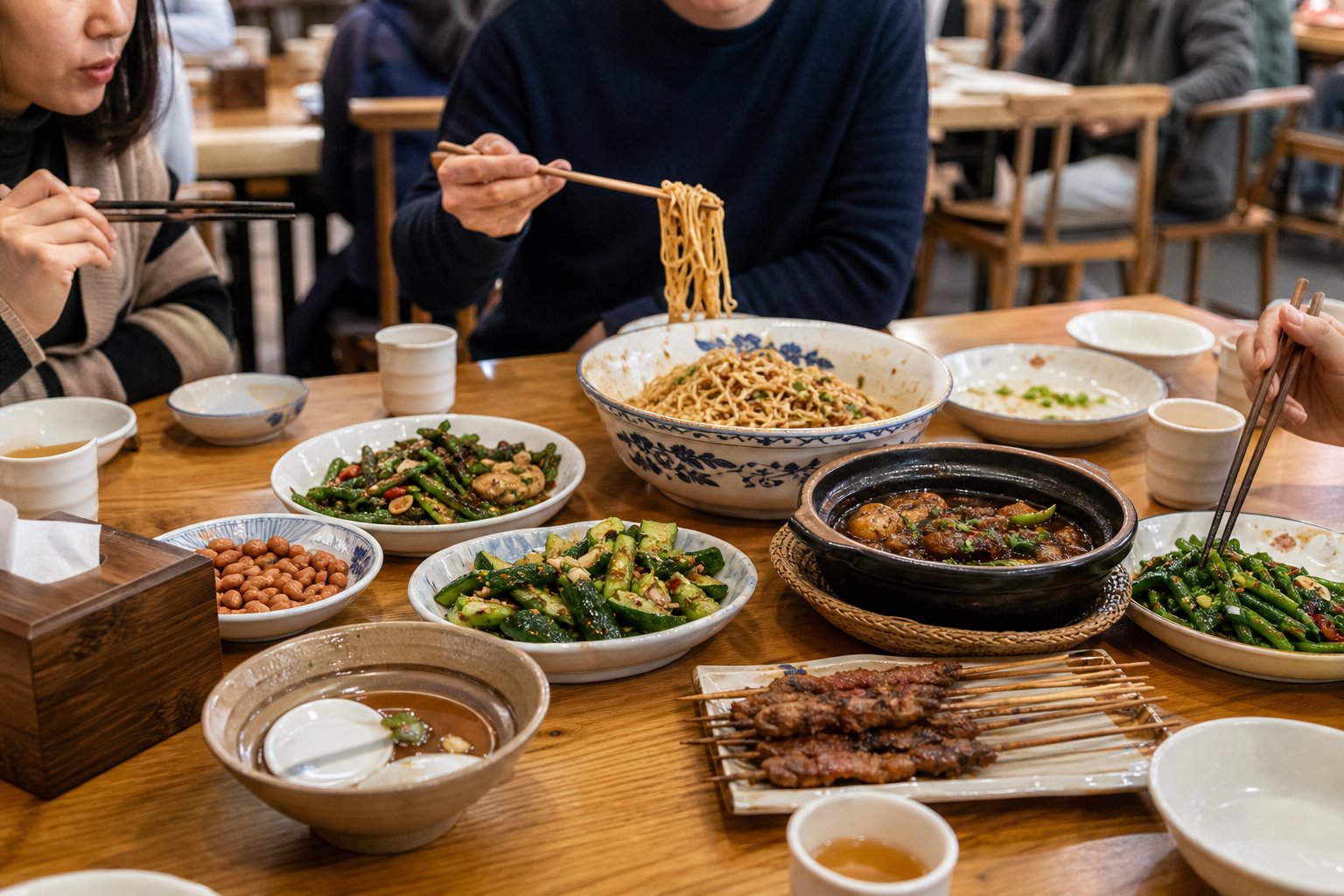
- Shared dishes are common; individual noodle and rice meals are the main exception.
- Chopsticks are standard, but many restaurants can provide a spoon.
- Hot or warm water is common. Ask specifically or buy bottled water if you prefer cold.
- Tipping is generally not expected in ordinary restaurants.
- It is normal to call a server with 服务员 (fúwùyuán) or raise your hand.
- At group meals, offering to pay can become a friendly contest. Agreeing in advance avoids confusion.
Reliable dishes found in many cities
Malatang · 麻辣烫
Choose vegetables, tofu, noodles and meat, then pay by weight. Ask about a non-spicy broth if needed.
Dapanji · 大盘鸡
A large Xinjiang-style chicken, potato and pepper dish, often finished with noodles. Even small portions are commonly designed for sharing.
Skewers · 串儿
Meat, mushrooms, tofu and vegetables seasoned with cumin and chilli. Select items carefully and confirm the spice level.
Noodles · 面条
Every region has its own style. Lanzhou beef noodles are a widely available fallback when you want a quick meal.