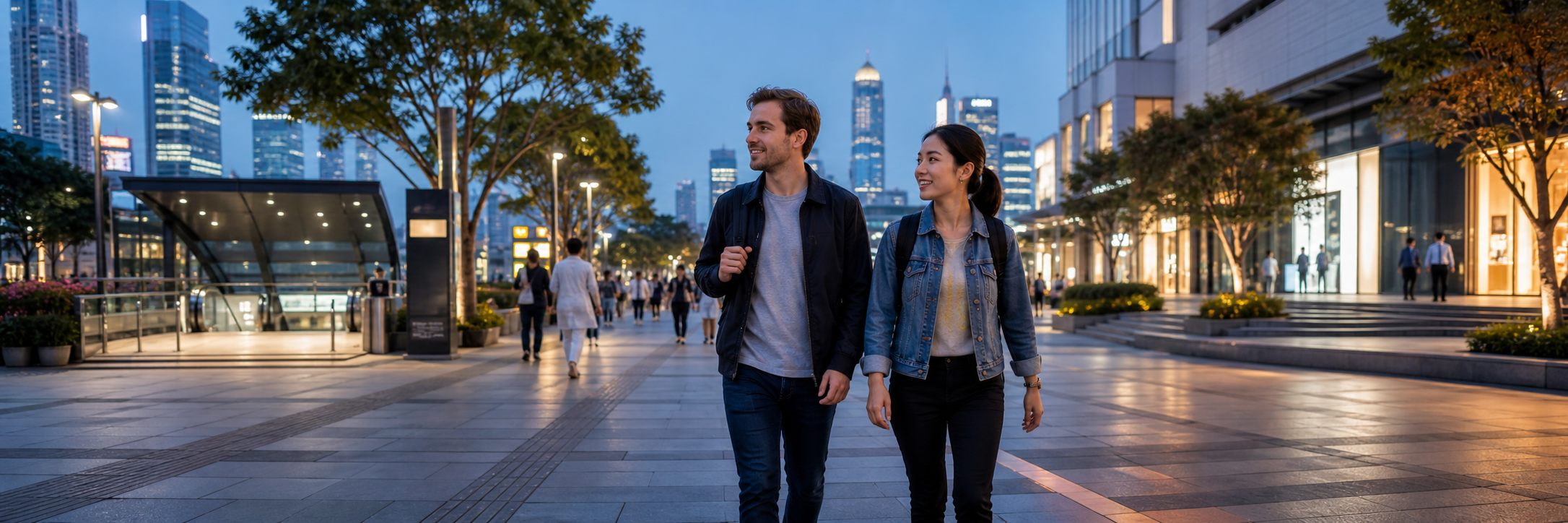
Many visitors find China comfortable to explore, including after dark, but no destination is risk-free. Ordinary precautions still matter: protect your belongings, use licensed transport, be cautious around unsolicited offers and know how to get help.
The balanced answer: generally safe, stay aware
Serious crime affecting visitors is uncommon, while petty theft, scams, traffic hazards and occasional isolated attacks can occur. Stay alert in crowded tourist areas and transport hubs, avoid confrontations and follow local instructions at security checks.
Everyday habits that prevent most problems
Secure your belongings
Keep phones, wallets and passports in a closed bag, particularly in queues, markets, stations and crowded metro cars.
Protect your passport
Visitors aged 16 or above must carry a passport, other travel document or stay or residence permit. Keep a digital copy separately in case the original is lost.
Keep key details offline
Save your hotel’s Chinese name, address and phone number, plus insurance and emergency contacts, where they work without mobile data.
Health and practical comfort
Drinking water
Do not drink untreated tap water. Use sealed bottled water, properly filtered water or water that has been boiled; hotels commonly provide a kettle or bottled water.
Medication
Bring enough regular medication for the trip in its original packaging, with a copy of the prescription where appropriate. Check import restrictions before travelling.
Air and weather
Air quality and temperature vary greatly by city and season. Check the local forecast and AQI, reduce strenuous outdoor activity when conditions are poor and prepare for heat, cold or heavy rain.
Public toilets
Facilities may be squat-style and may not provide paper or soap. Carry tissues and hand sanitiser; malls, airports and larger hotels are more likely to offer Western-style toilets.
Common scams and tourist traps
Most conversations with local people are genuine. The warning sign is not friendliness itself, but pressure to follow a new acquaintance to a particular venue, scan an unfamiliar code or pay an unclear price.
Tea, bar or massage scam
A friendly stranger suggests a nearby venue, where an unexpectedly large bill appears. Politely decline, choose your own venue and see a priced menu before ordering.
If you are threatened or prevented from leaving, prioritise your physical safety and call police on 110 when you can do so safely.
Taxi and rickshaw overcharging
Use an official taxi queue, a licensed metered taxi or a reputable ride-hailing app. Avoid drivers soliciting inside airport or station arrival halls.
For rickshaws and other informal rides, agree on the complete price and route before moving.
QR codes, cash and change
Scan payment codes displayed by the merchant, not loose stickers or codes sent by strangers. Confirm the merchant name and amount before approving payment.
When using cash, count change before leaving and keep the transaction in view.
Very cheap tours
A low headline price may hide shopping stops, extra admission fees or transport charges. Book through a traceable operator and read recent reviews, inclusions and cancellation terms.
Do not hand your passport to an unofficial seller as security for a booking.
Road, taxi and pedestrian safety
Look both ways, even when you have the signal
- Electric scooters and bicycles can be quiet and may approach from either direction
- Check the vehicle plate and driver details before entering a ride-hailing car
- Wear a helmet where one is provided and follow local rules when cycling
- Avoid standing in cycle lanes while waiting to cross or checking your phone
- At night, use well-lit routes and pay attention to uneven pavements and steps
Food safety without missing the experience
Street food can be a memorable part of a trip. Choose busy vendors with good turnover, food that is cooked thoroughly and served hot, and ingredients that appear properly stored. If a restaurant has no clear prices, ask before ordering seafood, tea or dishes sold by weight.
- Tell staff clearly about serious allergies; translation text on your phone can help
- Increase spice and unfamiliar foods gradually if you have a sensitive stomach
- Stay hydrated during hot weather, long walks and high-altitude travel
- Seek professional medical help for severe symptoms rather than relying only on travel medication
Emergency numbers in mainland China
These services use separate national numbers. Calls are free, but English-language assistance may vary by location.
When calling, give your exact location first, then describe what happened and whether anyone is injured. Ask a hotel employee, attraction staff member or Chinese speaker nearby to help if communication is difficult. Call 122 for a road traffic accident.
If something goes wrong
Lost or stolen passport
Report the loss to the local police promptly, contact your embassy or consulate, and follow the local exit-entry authority’s instructions for replacing the visa or stay document. Keep copies of your passport identity page and entry record separately.
Theft, fraud or a serious dispute
Move to a safe public place, call 110 when necessary and preserve receipts, screenshots, transaction records, vehicle plates and venue details. Contact your bank quickly if card or account details may be compromised.
Stay alert, not anxious
Use official transport, check prices before committing, protect your identity documents and save the emergency numbers. With those habits in place, most visitors can focus on enjoying the trip.